
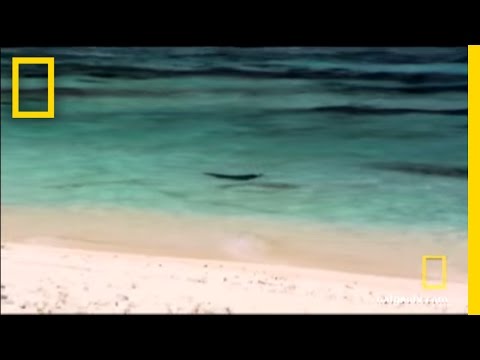
to study seal habitat ecologist dr.
Frank Parrish needed to know what was
going on beyond the beach
on an earlier mission he turned to
national Geographics Crittercam
Crittercam is a recording device once
attached to an animal it records its
every move
this gave us the opportunity to
basically follow the seal into the water
and we found some pretty exciting things
we found that they were going right off
shore and they were sleeping 50% of the
time that they’re away from the beach
they weren’t eating they were sleeping I
was that was a shock
Frank had no idea how deep the riddle of
monk Ziya life was about to get
the seals headed into the murky depths
too dark for the camera to see I would
start but satellite tags showed the
seals clustering over one specific
location
Frank and other experts joined the
University of Hawaii to investigate
in a deep sea submarine they plunge into
darkness down an incredible 1,600 feet
that’s pretty much barren is boring
there’s not much to say
then suddenly oh what’s that oh look at
that
there’s life as a big dream we came to
these things that were sticking up there
kind of like pinnacles off the bottom
and then they were completely encrusted
with these big beautiful gold corals you
got down there you were looking at what
the seals were feeding at
here fish can’t hide from seals in the
coral they’re easier to catch open
bottom sand places loose rock that they
can flip over I mean they’re finding
habitats that they can get at the fish
then on a follow-up dive proof positive
oh my god
a monk seal at the bottom of the world
foraging for food
this discovery radically changes the way
scientists must view where seals live
their habitat must be protected beyond
the beaches beyond the shallow corals
Please follow and like us: