
Translator: Ahmed Alahmary Checker: Riyad Almubarak
At first I really love the Internet.
Over the next ten minutes, you will look like the opposite.
The Internet is a fantasy thing; it is full of great things.
You can communicate with your friends around the world,
You see cats videos,
You can learn new skills.
You see cats videos,
You can spread your political and social ideas.
I believe most of the time I watch cats videos.
I like procrastination very much.
But there are so many wonderful things!
One of the coolest things about the Internet
Lies in the capabilities of Internet users.
A few years ago, Twitter users attacked the Daily Mail writer Jean Mauer,
Because of her talk about homosexuality saturated with hatred and her death by “Stephen Jitley.”
Here were a number of people who saw injustice
They decided to defy the use of the Internet to equalize the two teams.
More broadly in 2011,
Egyptians used the Internet to overthrow their government,
Whatever happened later, its use included two things:
First, it allows the participation of social and political ideas.
Second: It was far from the control of government and security,
Allowing these ideas to spread widely.
If not for the hidden property in the Internet
Since these results.
We are currently living in this modern and totally fictional digital age,
Where each of us is considered a digital leader.
We can challenge institutions, share new ideas,
He did incredible things.
This is Manifest Destiny 2.0
But there are problems.
I would not stand up and talk to you if there were no problems.
One of these problems lies in the steady increase of cybercrime.
Last year in England and Wales only,
Nearly 6 million cases of cybercrime,
Has spread to everything including identity theft and fraud,
Through harassment of children, human trafficking and terrorism.
What is worse is that this figure is constantly increasing year after year!
In fact, 1 of 10 of you exhibit a cybernetic crime during his lifetime.
You are about twenty times exposed to looting through the Internet,
Compared to your exposure to looting in the street.
These figures are on the rise.
Part of our problem with the Internet lies in providing it with some level of concealment
Which may not be available elsewhere.
All it takes is a fake account, a fake email,
And you can become anyone.
Your actions have no consequences as long as you are unknown to anyone.
What is the solution to this growing threat?
Well, I personally think that one solution could be in criminal linguistics.
Apart from the magnificence of criminal linguistics and written on the business card,
Is actually something very easy.
Is a branch of social linguistics,
This is a complicated term because of something most of you might know,
Which means you learn your language from the people around you.
If this is the case, each language will be your own
You will differ from the person sitting next to you.
So you’ll talk to your grandparents in a different way.
Age, gender, race, sexual orientation, social status, scientific level,
Where you were born and where you grew up.
All affect your language at the levels of conversation and writing.
This is a kind of social linguistics,
We can prove this with so-called linguistic codes.
Which is a technical term for something not technically.
The code is a huge set of data and if we analyze enough linguistic data
We can get basic expressions, words and terms,
To recognize the prevailing and non-mainstream.
What are specific social groups?
I will give you an example:
I will apologize in advance and strongly to the young people who see us.
Especially “Matilda”.
The phrase “Bmli”
Probably not said by someone over thirty,
But it is not expected to say someone who has whiteness in his hair and exceeded the seventy,
Unless you’re really cute!
I do not know maybe!
(Laughter)
If we had an anonymous person using a word
“Palmly” in his dialogues on the Internet,
The odds are that we are dealing with someone under the age of 30,
Or a candidate speaker for TEDx
Who tries to use the words spoken by young people to dazzle his audience!
(Laughter)
Their impact is clear from my experience.
(Laughter)
This leads us to begin to characterize the language used.
And perhaps other things added to the language.
Imogi is something completely new; it has appeared in the last few years.
Some groups of society do not use these terms.
This is called “variance among the authors”
This shows how the everyday things that affect my life,
Age, sexual, ethnic, sexual orientation,
My words changed
And make me different from others in this room
Because no one else lived the life that I lived and vice versa.
This makes you different from your best friends,
Your brother, your sister, your partner, your father or your mother.
They will all be different from you because you have lived different life experiences.
So your language will be different as well.
Not different from those around you, but from an anonymous person on the Internet.
Another thing a linguist can do is analyze a workgroup.
The working community is another technical term, but it is simple.
Is the common language application used by a group among them.
Which you inevitably met every day of your life.
If you’ve embarked on a new job, maybe
You may encounter important words or perhaps terms you find incomprehensible to you.
Maybe your friends have special jokes among which you do not have a role
You are somehow considered an outsider.
This shows in your language as well.
Well, what you can know by analyzing the workgroup is the age of the group,
Are they friends for a long time or are they friends in some way?
Who is the new member of the group, and who is the oldest? Who is the leader?
Is there in the words of this group
What makes them a sub-sect or a branch of society?
So basically something about age like saying “Bmli”.
This is the working community.
Criminal linguistics means the application of all these theories
To assist the judicial system.
For example, we in society spend many, many of our time in the Internet.
This is a fact!
We have social media, and some of us rely on the Internet in their social life.
Some depend on him in the life of love.
Some of us for professional life.
(Laughter)
It’s funny!
But we rely on it all the time.
We offer copies of animate online.
Many of us rely on the Internet for mental and professional health,
However, many threats come.
Take, for example, harassment on the Internet.
Which is dangerous.
Especially if we know
That more than half of the 18-year-olds were reported to have been harassed online.
40% of those over the age of 18 use the Internet, which is fair
They were told they had been harassed online.
These figures are on the rise.
The most powerful harm to harassment online
Lies in its universality.
No, there is no customary list of vandals so you go to your house at night and everything stops.
We use 4G, tablets, smartphones and laptops.
You are exposed to its impact anywhere, anytime, anywhere in the world.
What bothers me is the statistics on the number of perpetrators of these crimes.
38% of people who have been bullied online or harassed have been anonymous.
And 28% by people they have not met during their lives and who do not know them at all.
They know nothing about that person except the hatred they have for them.
28% of people who have been bullied online have no idea who harms them.
Well, the relationship of criminal linguistics in this is not something serious,
But it is based on the principle of necessity. Cybercrime is increasing.
And part of cybercrime harassment online.
Part of the online harassment is provided by unknown individuals.
So we can start analyzing the language of these accused persons.
You can reveal their age, race,
Places of birth, and scientific levels.
You can fragment their writings into pieces
To discover a lot and lots of information, when you get enough of them,
That anonymous person on the Internet becomes less ambiguous.
You can find out if you have 12 hate mail messages
Do they hate you so much that they take messages as a means?
Or do you hate one person who sent twelve letters from twelve different accounts?
One of the most serious, will help you to sleep calmly,
He knows that you have fewer karhek than you might think.
What if there was a group?
Well, we can analyze the workgroup.
Can detect the last member of the group,
Then, we can see the weak link in the group.
Know who is the weakest link in the metal chain.
The commander will immediately see you as an outsider,
But a new person? They may not realize that easily.
Your language weaknesses will not be absorbed
As he did not command.
So give that group naive enough to believe in their hearts,
Gather as much information as possible and then proceed to your legal challenge.
We should not stop here, we should not stop at electronic harassment.
We have copies of conversations to harass children, there are chat rooms,
They smuggle weapons, drugs, and human beings through them.
There are chat rooms calling for extreme hatred.
Terrorism is born in the depths of the dark, deep Internet.
With every word they say, they provide more information about themselves
Which, if combined, we could classify
Let us make anonymous activities online only
One is much easier for the police.
Do not get me wrong,
Criminal linguistics is not the magic pill
Cybercrime,
Certainly not.
But it is a tool,
Tool can be learned, can be taught,
A tool can be used in conjunction with other tools
To help combat growing threats.
It is a way to illuminate the dark Internet
To unveil the unknown behind which these individuals are hiding.
This is her theory,
But I actually would like to take you on a tour on how to do it,
So this is a brief section of what I said earlier.
Yes, all written by the way,
Even this improvised talk has been reviewed with high accuracy,
Indeed, Reza received the readers of the “readers”.
(Laughter)
I remembered, some of you know about him.
So we’ll start easily, let’s review the coordination
Which many people do not realize they are doing.
If we look at the coordination here:
We have indent at the beginning of the line, use the correct punctuation, the “Oxford” comma.
I have a complete list of the number of declassive deletions, incidentally their number three.
Increasing points does not mean the length of downtime.
Here is a tutorial.
We can get to know the author directly there.
What about vocabulary?
Well, we have on Fleek Palmley used by the younger generation.
Perhaps not many young people after hearing this lecture but remain young.
I have little teens, as well as letters of kindness.
I also have the word ‘hip’ [Darge] written between inverse brackets.
What does this suggest to you about the author?
Perhaps isolated from postmodernism? Or a sense of cynicism self-consciousness?
Has a sense of humor?
For the public.
The working community: speech, author, speech characteristics,
Criminal linguistics, language profiling, author style.
All of these words are all represented by a specific working society.
It is not only linguistic, but social linguistics.
When we combine all these aspects into a single paragraph, what do we have?
We become very much.
We have a person.
We do not know whether he is male or female because of the lack of information.
We have someone there talking to a group.
Coordination: They have written experiences before.
Their spelling is consistent with British English in the word “gray” [gray].
We can easily exclude an entire country.
So what do we have?
Well, we have a teenager, maybe free, but we will focus on the side of adolescence.
(Laughter)
Thanks for laughing again!
(Laughter)
A teenager, using postmodern cynicism, and isolationism.
By virtue of my dealings with English prose up to high standards.
Present a lecture on a specific part of linguistics.
How many other parts are there?
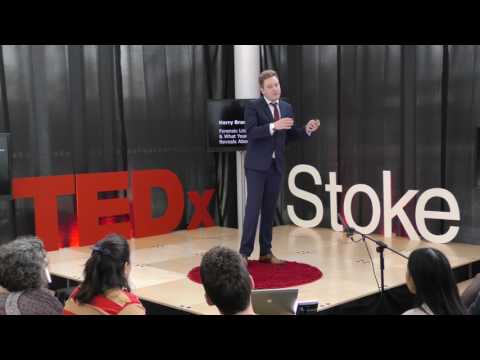
Thank you so much! I was with you “Harry Bradford” Thank you!
(clap)
At first I really love the Internet.
Over the next ten minutes, you will look like the opposite.
The Internet is a fantasy thing; it is full of great things.
You can communicate with your friends around the world,
You see cats videos,
You can learn new skills.
You see cats videos,
You can spread your political and social ideas.
I believe most of the time I watch cats videos.
I like procrastination very much.
But there are so many wonderful things!
One of the coolest things about the Internet
Lies in the capabilities of Internet users.
A few years ago, Twitter users attacked the Daily Mail writer Jean Mauer,
Because of her talk about homosexuality saturated with hatred and her death by “Stephen Jitley.”
Here were a number of people who saw injustice
They decided to defy the use of the Internet to equalize the two teams.
More broadly in 2011,
Egyptians used the Internet to overthrow their government,
Whatever happened later, its use included two things:
First, it allows the participation of social and political ideas.
Second: It was far from the control of government and security,
Allowing these ideas to spread widely.
If not for the hidden property in the Internet
Since these results.
We are currently living in this modern and totally fictional digital age,
Where each of us is considered a digital leader.
We can challenge institutions, share new ideas,
He did incredible things.
This is Manifest Destiny 2.0
But there are problems.
I would not stand up and talk to you if there were no problems.
One of these problems lies in the steady increase of cybercrime.
Last year in England and Wales only,
Nearly 6 million cases of cybercrime,
Has spread to everything including identity theft and fraud,
Through harassment of children, human trafficking and terrorism.
What is worse is that this figure is constantly increasing year after year!
In fact, 1 of 10 of you exhibit a cybernetic crime during his lifetime.
You are about twenty times exposed to looting through the Internet,
Compared to your exposure to looting in the street.
These figures are on the rise.
Part of our problem with the Internet lies in providing it with some level of concealment
Which may not be available elsewhere.
All it takes is a fake account, a fake email,
And you can become anyone.
Your actions have no consequences as long as you are unknown to anyone.
What is the solution to this growing threat?
Well, I personally think that one solution could be in criminal linguistics.
Apart from the magnificence of criminal linguistics and written on the business card,
Is actually something very easy.
Is a branch of social linguistics,
This is a complicated term because of something most of you might know,
Which means you learn your language from the people around you.
If this is the case, each language will be your own
You will differ from the person sitting next to you.
So you’ll talk to your grandparents in a different way.
Age, gender, race, sexual orientation, social status, scientific level,
Where you were born and where you grew up.
All affect your language at the levels of conversation and writing.
This is a kind of social linguistics,
We can prove this with so-called linguistic codes.
Which is a technical term for something not technically.
The code is a huge set of data and if we analyze enough linguistic data
We can get basic expressions, words and terms,
To recognize the prevailing and non-mainstream.
What are specific social groups?
I will give you an example:
I will apologize in advance and strongly to the young people who see us.
Especially “Matilda”.
The phrase “Bmli”
Probably not said by someone over thirty,
But it is not expected to say someone who has whiteness in his hair and exceeded the seventy,
Unless you’re really cute!
I do not know maybe!
(Laughter)
If we had an anonymous person using a word
“Palmly” in his dialogues on the Internet,
The odds are that we are dealing with someone under the age of 30,
Or a candidate speaker for TEDx
Who tries to use the words spoken by young people to dazzle his audience!
(Laughter)
Their impact is clear from my experience.
(Laughter)
This leads us to begin to characterize the language used.
And perhaps other things added to the language.
Imogi is something completely new; it has appeared in the last few years.
Some groups of society do not use these terms.
This is called “variance among the authors”
This shows how the everyday things that affect my life,
Age, sexual, ethnic, sexual orientation,
My words changed
And make me different from others in this room
Because no one else lived the life that I lived and vice versa.
This makes you different from your best friends,
Your brother, your sister, your partner, your father or your mother.
They will all be different from you because you have lived different life experiences.
So your language will be different as well.
Not different from those around you, but from an anonymous person on the Internet.
Another thing a linguist can do is analyze a workgroup.
The working community is another technical term, but it is simple.
Is the common language application used by a group among them.
Which you inevitably met every day of your life.
If you’ve embarked on a new job, maybe
You may encounter important words or perhaps terms you find incomprehensible to you.
Maybe your friends have special jokes among which you do not have a role
You are somehow considered an outsider.
This shows in your language as well.
Well, what you can know by analyzing the workgroup is the age of the group,
Are they friends for a long time or are they friends in some way?
Who is the new member of the group, and who is the oldest? Who is the leader?
Is there in the words of this group
What makes them a sub-sect or a branch of society?
So basically something about age like saying “Bmli”.
This is the working community.
Criminal linguistics means the application of all these theories
To assist the judicial system.
For example, we in society spend many, many of our time in the Internet.
This is a fact!
We have social media, and some of us rely on the Internet in their social life.
Some depend on him in the life of love.
Some of us for professional life.
(Laughter)
It’s funny!
But we rely on it all the time.
We offer copies of animate online.
Many of us rely on the Internet for mental and professional health,
However, many threats come.
Take, for example, harassment on the Internet.
Which is dangerous.
Especially if we know
That more than half of the 18-year-olds were reported to have been harassed online.
40% of those over the age of 18 use the Internet, which is fair
They were told they had been harassed online.
These figures are on the rise.
The most powerful harm to harassment online
Lies in its universality.
No, there is no customary list of vandals so you go to your house at night and everything stops.
We use 4G, tablets, smartphones and laptops.
You are exposed to its impact anywhere, anytime, anywhere in the world.
What bothers me is the statistics on the number of perpetrators of these crimes.
38% of people who have been bullied online or harassed have been anonymous.
And 28% by people they have not met during their lives and who do not know them at all.
They know nothing about that person except the hatred they have for them.
28% of people who have been bullied online have no idea who harms them.
Well, the relationship of criminal linguistics in this is not something serious,
But it is based on the principle of necessity. Cybercrime is increasing.
And part of cybercrime harassment online.
Part of the online harassment is provided by unknown individuals.
So we can start analyzing the language of these accused persons.
You can reveal their age, race,
Places of birth, and scientific levels.
You can fragment their writings into pieces
To discover a lot and lots of information, when you get enough of them,
That anonymous person on the Internet becomes less ambiguous.
You can find out if you have 12 hate mail messages
Do they hate you so much that they take messages as a means?
Or do you hate one person who sent twelve letters from twelve different accounts?
One of the most serious, will help you to sleep calmly,
He knows that you have fewer karhek than you might think.
What if there was a group?
Well, we can analyze the workgroup.
Can detect the last member of the group,
Then, we can see the weak link in the group.
Know who is the weakest link in the metal chain.
The commander will immediately see you as an outsider,
But a new person? They may not realize that easily.
Your language weaknesses will not be absorbed
As he did not command.
So give that group naive enough to believe in their hearts,
Gather as much information as possible and then proceed to your legal challenge.
We should not stop here, we should not stop at electronic harassment.
We have copies of conversations to harass children, there are chat rooms,
They smuggle weapons, drugs, and human beings through them.
There are chat rooms calling for extreme hatred.
Terrorism is born in the depths of the dark, deep Internet.
With every word they say, they provide more information about themselves
Which, if combined, we could classify
Let us make anonymous activities online only
One is much easier for the police.
Do not get me wrong,
Criminal linguistics is not the magic pill
Cybercrime,
Certainly not.
But it is a tool,
Tool can be learned, can be taught,
A tool can be used in conjunction with other tools
To help combat growing threats.
It is a way to illuminate the dark Internet
To unveil the unknown behind which these individuals are hiding.
This is her theory,
But I actually would like to take you on a tour on how to do it,
So this is a brief section of what I said earlier.
Yes, all written by the way,
Even this improvised talk has been reviewed with high accuracy,
Indeed, Reza received the readers of the “readers”.
(Laughter)
I remembered, some of you know about him.
So we’ll start easily, let’s review the coordination
Which many people do not realize they are doing.
If we look at the coordination here:
We have indent at the beginning of the line, use the correct punctuation, the “Oxford” comma.
I have a complete list of the number of declassive deletions, incidentally their number three.
Increasing points does not mean the length of downtime.
Here is a tutorial.
We can get to know the author directly there.
What about vocabulary?
Well, we have on Fleek Palmley used by the younger generation.
Perhaps not many young people after hearing this lecture but remain young.
I have little teens, as well as letters of kindness.
I also have the word ‘hip’ [Darge] written between inverse brackets.
What does this suggest to you about the author?
Perhaps isolated from postmodernism? Or a sense of cynicism self-consciousness?
Has a sense of humor?
For the public.
The working community: speech, author, speech characteristics,
Criminal linguistics, language profiling, author style.
All of these words are all represented by a specific working society.
It is not only linguistic, but social linguistics.
When we combine all these aspects into a single paragraph, what do we have?
We become very much.
We have a person.
We do not know whether he is male or female because of the lack of information.
We have someone there talking to a group.
Coordination: They have written experiences before.
Their spelling is consistent with British English in the word “gray” [gray].
We can easily exclude an entire country.
So what do we have?
Well, we have a teenager, maybe free, but we will focus on the side of adolescence.
(Laughter)
Thanks for laughing again!
(Laughter)
A teenager, using postmodern cynicism, and isolationism.
By virtue of my dealings with English prose up to high standards.
Present a lecture on a specific part of linguistics.
How many other parts are there?
Thank you so much! I was with you “Harry Bradford” Thank you!
(clap)
Please follow and like us: